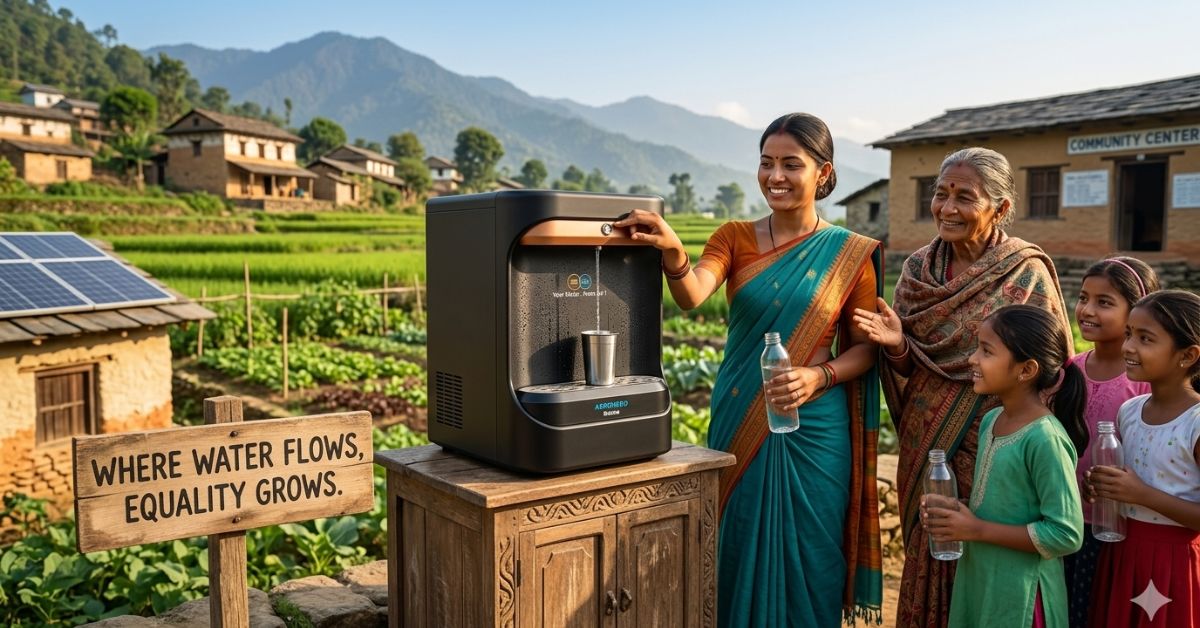
Where Water Flows, Equality Grows: How Innovation is Empowering Women in Water Access
Introduction: The Connection Between Water and Equality
Water is essential to life—but its impact goes far beyond hydration. It influences health, education, economic growth, and, most importantly, gender equality.
As we approach World Water Day 2026, the theme “Where Water Flows, Equality Grows” highlights a powerful truth: access to clean water is directly linked to empowering women and building stronger communities.
For decades, women have been at the center of water systems—yet they have often carried the burden without receiving equal opportunities. Today, innovation is changing that narrative.
The Reality: Women and the Global Water Crisis
In many parts of the world, access to clean water remains a daily challenge. Millions of households rely on distant or unreliable water sources.
In most of these households, the responsibility falls on women and girls.
They spend hours each day:
· Walking long distances to collect water
· Carrying heavy containers back home
· Managing water usage for entire families
This routine has serious consequences:
· Girls miss school due to water collection duties
· Women have limited time for employment or entrepreneurship
· Physical health is affected by long and strenuous journeys
· Opportunities for growth and independence are restricted
Water scarcity, therefore, is not just an environmental issue—it is a barrier to equality.
A Shift in Perspective: From Burden to Opportunity
The narrative around water is changing.
Instead of viewing women only as water carriers, there is growing recognition of their potential as:
· Decision-makers
· Innovators
· Leaders in water management
Empowering women in water systems is not just about reducing their workload—it is about unlocking their full potential.
This is where innovation plays a critical role.
The Role of Innovation in Water Access
Traditional water systems—such as pipelines, wells, and rain-dependent sources—have limitations. They are often expensive, geographically restricted, and vulnerable to climate change.
Today, new technologies are redefining water access by making it:
· Decentralized
· Sustainable
· Accessible anywhere
One of the most transformative innovations is Atmospheric Water Generation (AWG).
Turning Air into Water: A New Possibility
Imagine generating clean drinking water directly from the air.
Atmospheric Water Generation (AWG) makes this possible by capturing moisture from the atmosphere and converting it into safe, drinkable water.
This breakthrough technology offers several advantages:
· No dependence on rivers or groundwater
· No reliance on unpredictable rainfall
· Minimal infrastructure requirements
· Scalable solutions for both rural and urban areas
By removing traditional barriers, AWG creates a future where water is available wherever it is needed.
Empowering Women Through Water Innovation
When innovative water solutions are introduced, the impact on women is immediate and transformative.
1. Time Freedom
With water available locally, women no longer need to spend hours collecting it. This saved time can be used for:
· Education
· Skill development
· Income-generating activities
2. Improved Health
Access to clean water reduces exposure to waterborne diseases and physical strain, leading to healthier lives.
3. Economic Opportunities
Women can participate in economic activities, start businesses, or take up jobs when freed from daily water collection responsibilities.
4. Leadership and Participation
Modern water technologies are opening doors for women to take on roles such as:
· Technicians and operators
· Community leaders
· Decision-makers in water management
This shift transforms women from beneficiaries into leaders of change.
Why Women’s Leadership Matters in Water Solutions
Including women in water innovation is not just a matter of fairness—it is a strategy for success.
When women are involved:
· Solutions are more practical and tailored to community needs
· Adoption and usage rates increase
· Systems are better maintained and sustained
· Social impact is amplified
Women bring unique perspectives shaped by real-life experiences. Their leadership ensures that water solutions are inclusive, effective, and long-lasting.
Building Stronger Communities Through Water Access
When clean water becomes accessible, the benefits extend beyond individuals to entire communities.
· Education Improves: Girls can attend school regularly, leading to better literacy and future opportunities.
· Health Outcomes Improve: Safe drinking water reduces disease and enhances overall well-being.
· Economic Growth Accelerates: Communities become more productive as time and resources are used efficiently.
· Social Equality Strengthens: Equal access to resources creates a more balanced and inclusive society.
Water becomes a foundation for sustainable development.
Sustainability: Protecting Resources for the Future
Innovation in water access is not just about availability—it is also about sustainability.
Technologies like AWG contribute to environmental protection by:
· Reducing dependency on groundwater extraction
· Utilizing renewable atmospheric moisture
· Minimizing ecological impact
· Supporting climate-resilient solutions
In a world facing climate uncertainty, sustainable water solutions are essential for long-term progress.
World Water Day 2026: A Global Movement
The theme “Where Water Flows, Equality Grows” is more than a slogan—it is a vision for the future.
It calls for:
· Inclusive water policies
· Investment in innovative technologies
· Active participation of women in decision-making
· Community-driven solutions
World Water Day 2026 serves as a reminder that water access and gender equality must go hand in hand.
The Way Forward: Innovation with Inclusion
To truly empower communities, we must combine:
· Technology that solves real-world problems
· Inclusion that ensures equal participation
· Sustainability that protects future generations
Organizations, governments, and communities must work together to scale solutions that prioritize both access and equality.
Conclusion: A Future Where Equality Flows
Water has the power to transform lives—but only when it is accessible to all.
By embracing innovation and empowering women, we can create a future where:
· No one is burdened by water scarcity
· Women lead solutions that shape communities
· Opportunities grow with every drop of water
The message is clear:
Where water flows freely, equality grows naturally.
Final Thought
As we move forward into 2026 and beyond, the goal is not just to provide water—but to unlock potential.
Because when women are empowered through access to water, they do not just change their own lives—
they transform the world around them.