
What is Atmospheric Water Generation? The Science Behind Creating Water from Air
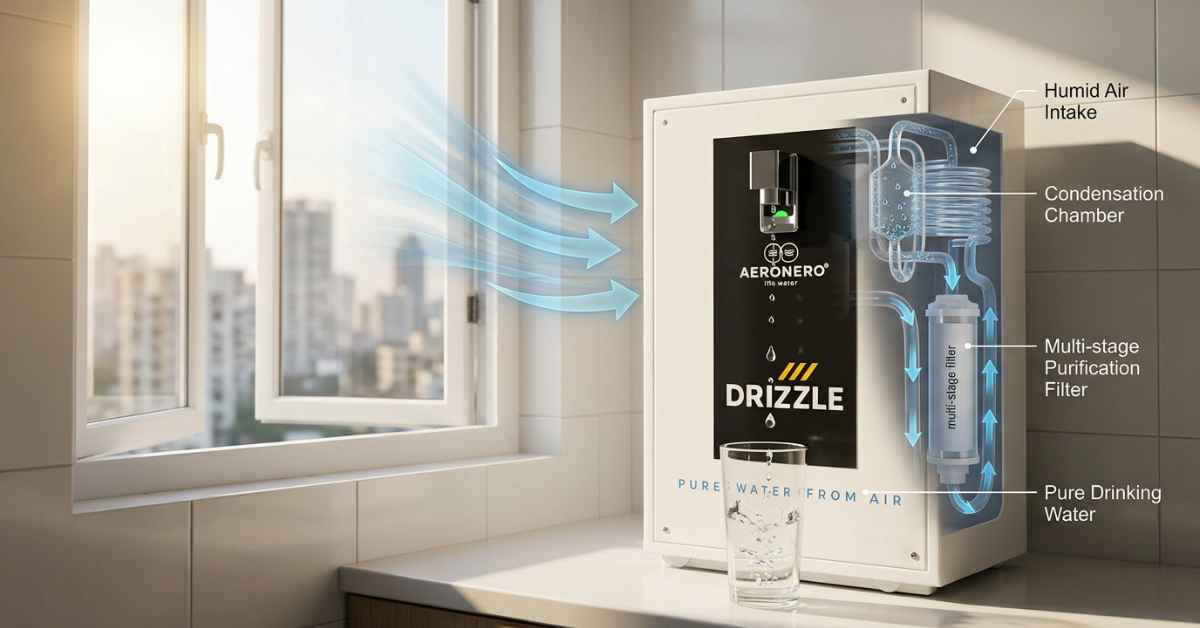
Water is one of the most essential resources for life, yet access to safe drinking water remains a growing challenge across the world. Rising population, rapid urbanization, groundwater depletion, industrial pollution, and climate change are placing unprecedented pressure on conventional water sources.
As freshwater resources become increasingly stressed, innovative technologies are emerging to create sustainable and decentralized water solutions. One such breakthrough is Atmospheric Water Generation (AWG), a technology that extracts water directly from the air and converts it into safe drinking water.
Often referred to as "Water from Air" technology, Atmospheric Water Generation is rapidly gaining attention as a reliable solution for homes, industries, institutions, rural communities, and disaster-relief operations.
This guide explores the science behind AWG, how it works, its benefits, limitations, applications, and why it is becoming a critical component of future water security.
What is Atmospheric Water Generation?
Atmospheric Water Generation (AWG) is the process of extracting moisture present in the atmosphere and converting it into purified drinking water.
The Earth's atmosphere contains an estimated 13 trillion tonnes of water in the form of vapor. AWG systems harness this naturally available moisture using advanced engineering processes involving air handling, condensation, adsorption technologies, and water purification systems.
In simple terms, AWG technology creates clean water from air without depending on groundwater, rivers, lakes, or municipal water supplies.
This makes AWG particularly valuable in regions experiencing water scarcity, groundwater contamination, infrastructure limitations, or climate-related water challenges.
The Science Behind Water from Air
The atmosphere continuously contains water vapor, even in relatively dry environments. The amount of moisture present depends on temperature, humidity, and climatic conditions.
Atmospheric Water Generators operate based on the principle of condensation and psychrometric science.
When warm humid air is cooled below its dew point temperature, water vapor transforms into liquid water droplets. This is the same natural phenomenon observed when droplets form on a cold glass surface.
Modern AWG systems accelerate and optimize this process using engineered heat exchange systems, energy-efficient cooling mechanisms, and advanced water purification technologies.
Different Types of Atmospheric Water Generation Technologies
1. Refrigeration-Based AWG
This is the most widely used technology.
The system cools incoming air below its dew point, causing moisture to condense into water. The collected water is then purified and mineralized before consumption.
Advantages:
- Proven technology
- High water quality
- Suitable for moderate to high humidity environments
2. Desiccant-Based AWG
Desiccant materials absorb moisture from air. The captured moisture is later released through controlled heating and condensed into water.
Advantages:
- Better performance in lower humidity conditions
- Reduced dependence on high atmospheric moisture
- Potential for renewable energy integration
3. Hybrid AWG Systems
Hybrid systems combine refrigeration and desiccant technologies to maximize water recovery while reducing energy consumption.
These systems represent the next generation of atmospheric water harvesting solutions.
4. Solar-Assisted AWG
Solar energy can be integrated with AWG systems to reduce operational costs and improve sustainability.
This approach is particularly attractive for remote and off-grid applications.
How Does Atmospheric Water Generation Work?
Step 1: Air Intake
The system draws ambient air through high-efficiency air filters that remove dust, pollen, and airborne contaminants.
Step 2: Moisture Extraction
Depending on the technology used, moisture is either condensed through cooling or absorbed using specialized desiccant materials.
Step 3: Water Collection
Extracted moisture is converted into liquid water and collected in food-grade storage tanks.
Step 4: Multi-Stage Purification
The collected water passes through several purification stages, including:
- Sediment filtration
- Activated carbon filtration
- UV sterilization
- Mineral enhancement
- Optional reverse osmosis treatment
These processes ensure microbiological safety and improved taste.
Step 5: Water Quality Monitoring
Advanced systems continuously monitor water quality parameters to maintain drinking water standards.
Step 6: Fresh Drinking Water Delivery
The purified water is stored and dispensed for immediate use or future consumption.
Water Quality and Safety
A common question is whether water generated from air is safe to drink.
The answer is yes, provided the system incorporates appropriate purification and monitoring technologies.
Modern AWG systems remove:
- Dust and particulate matter
- Bacteria
- Viruses
- Organic contaminants
- Odors and volatile compounds
High-quality AWG systems are designed to meet or exceed drinking water quality standards, including BIS 10500 and WHO guidelines when properly maintained.
Additionally, essential minerals can be added to improve both taste and nutritional value.
Factors Affecting Water Production
The amount of water produced by an AWG system depends on several environmental parameters.
Humidity
Higher humidity levels generally increase water production.
Temperature
Warmer air can hold more moisture, enabling greater water extraction potential.
Airflow
Efficient air movement improves moisture capture rates.
Technology Type
Desiccant and hybrid systems may perform better than conventional condensation systems under challenging environmental conditions.
System Capacity
Commercial and industrial units can produce significantly larger volumes compared to residential models.
Energy Efficiency and Sustainability
One of the most important considerations in AWG technology is energy consumption.
The amount of electricity required to produce one litre of water depends on:
- Humidity levels
- Ambient temperature
- System design
- Heat recovery mechanisms
- Technology type
Recent advancements in compressor technology, intelligent controls, desiccant materials, and renewable energy integration have significantly improved energy efficiency.
Modern AWG systems are increasingly being coupled with solar energy and waste heat recovery systems to further reduce operating costs and environmental impact.
Why Atmospheric Water Generation Matters
Groundwater Conservation
AWG reduces dependence on overexploited groundwater resources.
Climate Resilience
It provides an alternative water source independent of rainfall patterns.
Decentralized Water Production
Water can be produced directly at the point of consumption.
Reduced Plastic Waste
AWG helps reduce reliance on bottled water and associated plastic pollution.
Emergency Water Security
The technology can provide reliable drinking water during disasters, droughts, and infrastructure failures.
Applications of Atmospheric Water Generation
Residential Buildings
Homeowners can access a continuous supply of purified drinking water.
Commercial Facilities
Hotels, offices, malls, and restaurants can reduce bottled water consumption.
Industrial Operations
Industries can supplement water requirements through decentralized production.
Healthcare Facilities
Hospitals benefit from a reliable and controlled water source.
Educational Institutions
Schools and universities can improve access to safe drinking water.
Rural Communities
AWG provides water independence in regions lacking conventional infrastructure.
Military and Disaster Relief
Portable systems support emergency and remote operations.
Atmospheric Water Generation in India
India faces increasing water stress due to rapid urbanization, groundwater depletion, and changing climatic conditions.
Several regions experience recurring water shortages, while many groundwater sources suffer from contamination issues.
Atmospheric Water Generation presents a promising opportunity to address these challenges by:
- Reducing groundwater extraction
- Providing decentralized water access
- Supporting rural water security
- Improving resilience against climate variability
- Enabling sustainable industrial water management
As awareness grows, AWG technology is expected to become an important component of India's future water infrastructure.
Aeronero's Vision for Sustainable Water Innovation
At Aeronero, we believe that the future of water lies in sustainable, decentralized, and technology-driven solutions.
Our research and development efforts focus on improving water recovery efficiency, reducing energy consumption, enhancing water quality monitoring, and integrating renewable energy solutions into atmospheric water generation systems.
By combining engineering innovation, environmental responsibility, and scientific research, Aeronero aims to make clean drinking water accessible wherever it is needed.
Our mission is not only to generate water from air but also to contribute toward long-term water security and environmental sustainability.
The Future of Atmospheric Water Generation
The future of AWG technology is being shaped by advances in:
- High-efficiency heat exchangers
- Smart IoT-enabled monitoring systems
- Advanced desiccant materials
- Renewable energy integration
- Artificial intelligence-based optimization
- Large-scale atmospheric water harvesting
As technology continues to evolve, AWG systems will become more energy efficient, cost-effective, and accessible, making water from air an increasingly viable solution for addressing global water challenges.
Conclusion
Atmospheric Water Generation is transforming the way the world thinks about water. By converting atmospheric moisture into clean drinking water, AWG provides a sustainable alternative to conventional water sources while helping address groundwater depletion, water scarcity, and environmental challenges.
As innovation continues to improve efficiency and affordability, AWG technology is poised to play a significant role in securing the future of clean water.
For individuals, businesses, institutions, and communities seeking a reliable and sustainable water solution, Atmospheric Water Generation represents one of the most promising technologies of the twenty-first century.
The future of water may not lie beneath the ground—it may already be floating in the air around us.