
Is Water from Air Safe to Drink? Science, Myths & Facts Explained
Access to clean drinking water is one of the most pressing challenges of our time. With increasing pollution, groundwater depletion, and rising dependence on bottled water, people are now looking for smarter and more sustainable solutions.
One such innovation gaining attention is water from air, produced by devices known as Atmospheric Water Generators (AWGs).
But the question most people ask is:
Is water from air safe to drink?
In this blog, we'll break down the science, myths, and facts behind this technology to help you understand whether it's truly a safe and reliable source of drinking water.
What Is Water from Air?
Water from air is exactly what it sounds like - drinking water extracted directly from the atmosphere.
The air around us always contains moisture, even if we cannot see it. Atmospheric Water Generators capture this humidity and convert it into liquid water using a controlled condensation process.
This is similar to how:
• Dew forms on grass in the early morning
• Water droplets appear on the outer surface of a cold glass
However, AWGs take this natural process further by incorporating advanced purification and filtration systems, making the water safe for human consumption.
How Does an Atmospheric Water Generator Work?
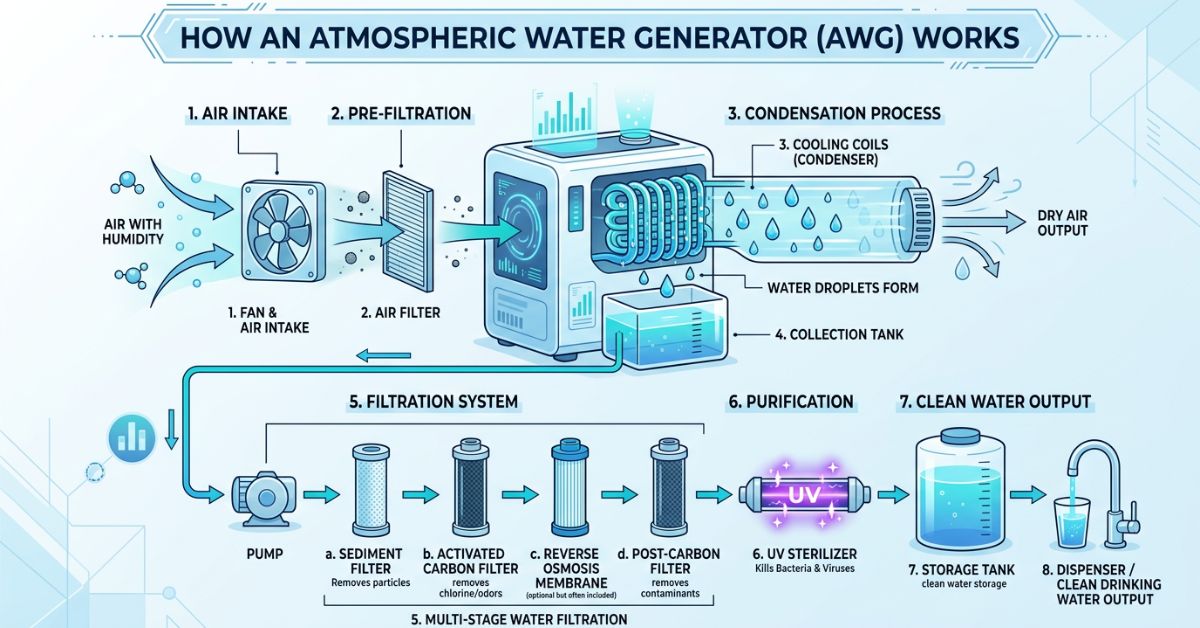
To understand safety, you first need to understand the process. An AWG typically operates through the following steps:
1. Air Intake
The machine draws in ambient air using a fan and pre-filter system.
2. Air Filtration
The incoming air passes through filters - typically HEPA or activated carbon - that remove dust, pollutants, pollen, and airborne particles before any condensation occurs.
3. Condensation
The filtered air is cooled by a refrigeration unit to below its dew point temperature - the temperature at which water vapor in the air begins to condense into liquid droplets. This is the same thermodynamic principle behind morning dew or fog formation.
4. Purification
The collected water is passed through multiple purification stages, which commonly include:
• Activated carbon filtration (removes chlorine, volatile organic compounds, and odors)
• Reverse osmosis - RO membrane filtration (in premium systems, removes dissolved solids and heavy metals)
• UV sterilization at 254 nm wavelength (destroys DNA of bacteria and viruses, ensuring microbiological safety)
5. Mineralization
Essential minerals such as calcium, magnesium, and potassium are added back to achieve a balanced Total Dissolved Solids (TDS) level — typically between 50–150 mg/L - which is within the range recommended by the World Health Organization (WHO) for drinking water.
The result is clean, purified, and mineral-balanced drinking water.
Is Water from Air Safe to Drink? (Scientific Answer)
Yes - water from air is safe to drink, provided it is produced by a high-quality system with proper filtration and purification.
Here's why:
Multi-Stage Purification
Modern AWGs use advanced filtration systems that remove:
• Bacteria and viruses
• Dust, pollen, and airborne pollutants
• Harmful chemicals and heavy metals
UV Sterilization Technology
UV purification at a wavelength of 254 nm is effective at destroying the DNA of microorganisms, ensuring that the water is microbiologically safe without the use of chemicals.
Mineral Balance
Unlike distilled water, which has a flat taste and zero mineral content, AWGs include mineralization stages to ensure the water is healthy and suitable for daily consumption.
Controlled, Sealed Environment
The entire production process takes place inside a sealed system, significantly reducing the risk of external contamination between air intake and water dispensing.
Common Myths About Water from Air
Despite its benefits, there are several misconceptions about this technology. Let's clear them up.
Myth 1: "Air is polluted, so the water must be unsafe"
Fact: While air can contain pollutants, AWGs are designed with multi-layer air filtration systems — including HEPA and activated carbon filters — that remove airborne contaminants before water is produced. The subsequent purification process ensures that the final output is often cleaner than tap water.
Myth 2: "It's just distilled water with no nutrients"
Fact: High-quality AWGs include dedicated mineralization stages that add essential minerals such as calcium and magnesium, ensuring the water is not just safe - but also nutritionally balanced.
Myth 3: "Water from air tastes bad"
Fact: Taste depends on the quality of purification and the mineral content of the water. Properly treated AWG water is commonly described as:
• Fresh and clean
• Light and neutral in taste
• Free from the chlorine flavor found in many municipal supplies
Myth 4: "This technology is not reliable"
Fact: AWGs are already deployed in a wide range of environments, including:
• Homes and offices
• Military operations and remote field deployments
• Disaster relief and humanitarian missions
This breadth of use demonstrates that the technology is both practical and reliable.
Comparing Water from Air with Other Sources
1. Tap Water
• May contain chlorine, heavy metals, or microbial contaminants
• Quality varies significantly depending on location and infrastructure
AWG water is independent of pipelines and subject to controlled, consistent purification.
2. RO (Reverse Osmosis) Water
• Removes impurities but also strips essential minerals, resulting in a low TDS output
• Generates significant wastewater - typically 3–4 litres discarded per litre produced
AWG systems can deliver zero pipeline water wastage combined with mineral-rich output.
3. Bottled Water
• Expensive over time
• Risk of microplastic contamination from packaging
• Significant environmental impact from plastic waste and transportation
AWG water eliminates plastic waste and recurring costs while providing on-demand freshness.
Health Benefits of Water from Air
Drinking clean, purified water has direct health benefits, and AWG systems are engineered to deliver consistent, high-quality output.
Free from Contaminants - reduces the risk of waterborne diseases
Balanced Minerals - supports bone health, cardiovascular function, and overall hydration
No Chemical Additives - unlike municipal water, there is no residual chlorine or disinfection by-products
Freshly Generated - water is produced on demand, ensuring it has not been sitting in storage tanks
Factors That Ensure Safety
While AWGs are generally safe, their effectiveness depends on several key factors:
1. Quality of the Machine
A high-quality system with a multi-stage, certified filtration train is essential for safe output.
2. Regular Maintenance
Filters and UV components must be cleaned and replaced at recommended intervals to maintain performance.
3. Environmental Conditions
Ambient humidity levels affect the rate of water production. AWGs perform optimally at relative humidity above 60%. Lower humidity reduces output volume but does not compromise the safety of the water that is produced.
4. Proper Installation
Correct installation ensures optimal airflow, drainage, and system hygiene, all of which contribute to consistent performance.
Are There Any Risks?
When used correctly and maintained properly, AWGs are very safe. However, potential risks may arise if:
• Filters are not replaced at recommended intervals
• A low-quality system with inadequate filtration is used
• Routine cleaning and sanitization of storage tanks is neglected
These risks are comparable to those associated with any water purification system and can be easily avoided with basic, routine care.
Why Aeronero Is a Trusted Solution
At Aeronero, we focus on delivering safe, reliable, and sustainable water solutions. Our Atmospheric Water Generators are designed with:
• Advanced multi-stage air and water filtration
• UV purification technology operating at 254 nm
• Mineral enrichment systems calibrated to WHO-recommended TDS levels
• High-quality components engineered for long-term, consistent safety
This ensures that every drop of water you drink is:
✔ Pure
✔ Safe
✔ Healthy
With Aeronero, you don't just filter water - you create it from air with complete control over quality.
The Future of Drinking Water
As water scarcity and pollution continue to intensify, traditional sources are becoming less reliable. Technologies like Atmospheric Water Generators represent a meaningful shift toward:
• Decentralized water systems independent of aging infrastructure
• Sustainable solutions with minimal environmental footprint
• Water independence for homes, businesses, and communities
The ability to generate your own safe drinking water is no longer futuristic - it is already here.
Final Verdict
Yes, absolutely - water from air is safe to drink when produced using a high-quality Atmospheric Water Generator.
It is:
• Scientifically validated
• Properly purified using multi-stage technology
• Safe for daily consumption by all age groups
In many cases, it is cleaner and healthier than conventional water sources.
Conclusion
Water from air is not just a technological innovation - it is a practical solution to modern water challenges. By combining science, advanced filtration, and sustainability, AWGs provide a safe and reliable source of drinking water for homes, businesses, and communities.
If you are looking for a smarter way to stay hydrated without depending on uncertain water sources, it may be time to consider Aeronero's atmospheric water solutions.