
How Atmospheric Water Generators Are Transforming the Future of Clean Drinking Water
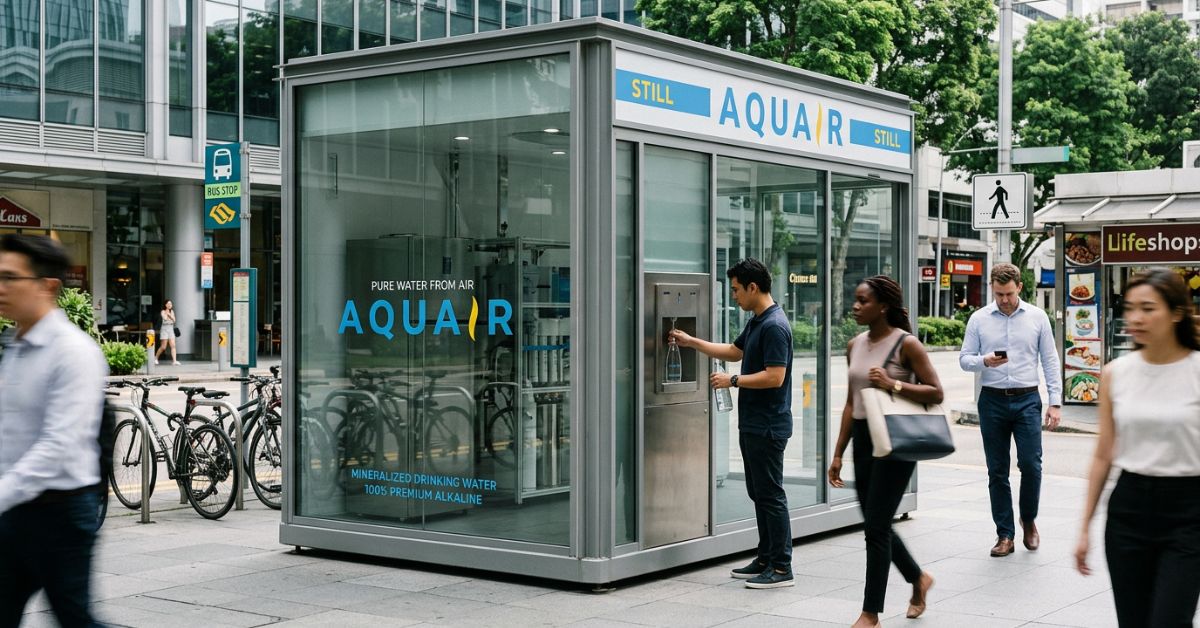
What If Your Next Glass of Water Came from the Air?
Imagine producing clean, safe drinking water directly from the air around you—without relying on groundwater, pipelines, or bottled water. What once seemed like a futuristic concept is now a practical reality through Atmospheric Water Generators (AWGs).
As climate change, population growth, rapid urbanization, groundwater depletion, and water pollution continue to place unprecedented pressure on conventional water sources, the world is actively seeking sustainable alternatives that ensure long-term water security. Access to clean drinking water is no longer just an environmental issue; it is a public health, economic, and social challenge.
Atmospheric Water Generators are emerging as one of the most innovative solutions to this global problem. By extracting moisture from the atmosphere and converting it into clean, mineral-rich drinking water, AWGs offer a decentralized, sustainable, and environmentally responsible approach to water generation.
Instead of depending solely on rivers, reservoirs, borewells, or bottled water, AWGs enable homes, businesses, institutions, and industries to produce drinking water exactly where it is needed.
Understanding Atmospheric Water Generators
An Atmospheric Water Generator (AWG) is a technology that captures naturally occurring water vapor from the atmosphere and converts it into safe drinking water through condensation, purification, sterilization, and mineralization.
Many people are surprised to learn that the atmosphere contains an enormous amount of water in the form of invisible vapor. Even in relatively dry climates, there is moisture suspended in the air. This atmospheric moisture is continuously replenished through Earth's natural water cycle.
AWGs replicate this natural process inside a controlled system. Similar to how morning dew forms on grass or droplets appear on the outside of a cold glass, the machine cools humid air below its dew point, causing water vapor to condense into liquid water.
The collected water then passes through multiple purification stages before being enriched with essential minerals, resulting in clean, safe, and pleasant-tasting drinking water.
Unlike conventional water systems that rely on groundwater extraction, municipal pipelines, or packaged drinking water, Atmospheric Water Generators create water directly at the point of consumption, improving reliability while reducing dependence on stressed freshwater resources.
Why the World Needs Alternative Water Solutions
Freshwater resources are becoming increasingly vulnerable to overuse, contamination, and climate variability.
Several factors are accelerating the global water crisis:
- Over-extraction of groundwater reserves
- Climate change and unpredictable rainfall patterns
- Aging water infrastructure
- Water pollution and contamination
- Growing urban populations
- Increasing industrial water demand
- Dependence on single-use plastic bottled water
As cities expand and freshwater resources become more constrained, the need for resilient and decentralized water technologies has never been greater.
Atmospheric Water Generation offers a complementary solution by creating drinking water independently of traditional water infrastructure, helping improve resilience during shortages and reducing pressure on existing resources.
How Atmospheric Water Generators Work
Modern AWGs combine advanced engineering with sophisticated water treatment technologies to transform atmospheric moisture into safe drinking water.
1. Air Intake
High-efficiency fans draw ambient air into the system. Initial filters remove dust, pollen, and other airborne particles before condensation begins.
2. Condensation
The filtered air passes over specialized cooling coils that reduce its temperature below the dew point. This causes invisible water vapor to condense into liquid water, much like dew forming naturally during cool mornings.
3. Multi-Stage Filtration
The condensed water is filtered through multiple stages to remove fine impurities and improve overall water quality.
4. Activated Carbon Purification
Activated carbon filtration enhances taste, removes odors, and helps eliminate trace contaminants.
5. Sterilization
Advanced sterilization technologies such as UV treatment or ozone disinfection destroy microorganisms, ensuring microbiological safety.
6. Mineralization
Since condensed water is naturally low in minerals, carefully balanced minerals such as calcium and magnesium are reintroduced to improve taste and create high-quality drinking water.
The result is fresh, clean drinking water generated directly from atmospheric moisture.
Does Humidity Affect Water Generation?
One of the most common questions about Atmospheric Water Generators is whether they work in every climate.
The answer is yes—but water production depends on environmental conditions.
Higher temperatures and higher humidity levels generally allow AWGs to generate more water because more atmospheric moisture is available for condensation.
In cooler or drier conditions, water production naturally decreases. However, modern Atmospheric Water Generators are engineered to operate efficiently across a broad range of climates through optimized heat exchange systems, intelligent controls, and energy-efficient designs.
Selecting the right AWG model based on local climatic conditions helps ensure optimal performance throughout the year.
Environmental Benefits of Atmospheric Water Generation
Conserving Groundwater
Groundwater is being extracted faster than it can naturally recharge in many parts of the world.
By producing drinking water directly from atmospheric moisture, AWGs help reduce dependence on underground aquifers and contribute to long-term water conservation.
Reducing Plastic Waste
Millions of plastic water bottles are consumed every day.
By generating drinking water on-site, homes, offices, schools, and businesses can significantly reduce their reliance on single-use plastic bottles, helping minimize landfill waste and environmental pollution.
Lower Carbon Footprint
Traditional bottled water involves manufacturing, packaging, transportation, warehousing, and distribution—all of which contribute to greenhouse gas emissions.
AWGs generate water exactly where it is consumed, reducing transportation requirements and supporting lower carbon emissions.
Efficient Water Utilization
Unlike many conventional purification technologies that reject a portion of the incoming water during treatment, Atmospheric Water Generators create drinking water directly from atmospheric moisture with minimal water wastage.
Supporting Sustainability Goals
Atmospheric Water Generation aligns with global sustainability initiatives by promoting responsible water use, reducing plastic consumption, and improving resilience against water scarcity.
Where Are Atmospheric Water Generators Used?
The flexibility of AWGs makes them suitable for numerous applications.
- Homes seeking an independent source of drinking water
- Corporate offices reducing bottled water consumption
- Schools and universities ensuring safe drinking water for students
- Hospitals and healthcare facilities requiring reliable potable water
- Hotels and resorts enhancing guest sustainability initiatives
- Manufacturing facilities supporting employee welfare
- Construction and mining sites in remote locations
- Oil and gas installations operating in water-stressed regions
- Defence and border outposts with limited water infrastructure
- Rural communities lacking centralized water supply
- Disaster relief operations requiring rapid deployment of safe drinking water
Their scalability enables solutions ranging from compact residential systems to high-capacity industrial installations.
Common Myths About Atmospheric Water Generators
Myth: AWGs only work in tropical climates.
Reality: Modern AWGs operate in a wide range of environmental conditions. While water production varies with humidity and temperature, advanced systems are designed for diverse climates.
Myth: Water generated from air is unsafe.
Reality: The water undergoes multiple stages of filtration, sterilization, and mineralization before consumption, ensuring high-quality drinking water.
Myth: Atmospheric water is simply distilled water.
Reality: While condensation initially produces highly pure water, beneficial minerals are added back to create balanced, great-tasting drinking water.
Myth: AWGs waste water.
Reality: Since AWGs generate water directly from atmospheric moisture, they avoid the reject-water streams associated with many conventional purification technologies and are designed for efficient water utilization.
The Rise of Water Independence
Just as rooftop solar panels have transformed electricity generation, Atmospheric Water Generators are redefining access to drinking water.
By enabling decentralized water production, AWGs reduce dependence on vulnerable supply chains, groundwater extraction, and bottled water logistics.
This concept of water independence provides greater resilience during droughts, infrastructure failures, and emergencies while supporting sustainable resource management.
As technology continues to evolve, AWGs are becoming more energy-efficient, intelligent, and accessible, making them an increasingly attractive solution for homes, businesses, industries, and communities.
How Aeronero Is Driving Innovation
As Atmospheric Water Generation continues to evolve, innovation plays a critical role in improving efficiency, reliability, and water quality.
Aeronero has developed ConDessa Technology™, integrating advanced condensation engineering with multi-stage purification, sterilization, and mineralization to produce clean, alkaline drinking water directly from atmospheric moisture.
From compact residential solutions such as Bubble and Drizzle to large-scale commercial and industrial systems, Aeronero's portfolio is designed to serve diverse applications while supporting sustainability goals.
By reducing dependence on groundwater, minimizing plastic waste, and enabling decentralized water production, Aeronero is helping organizations and communities move toward a more resilient and sustainable water future.
Frequently Asked Questions
Can Atmospheric Water Generators work in low humidity?
Yes. Water production decreases as humidity declines, but modern systems are engineered to operate efficiently across a broad range of environmental conditions.
Is atmospheric water safe to drink?
Yes. After condensation, the water undergoes filtration, sterilization, and mineralization to ensure safety, quality, and taste.
Do AWGs require a water connection?
No. AWGs generate drinking water directly from atmospheric moisture and generally do not require an external water supply.
Can an AWG replace bottled water?
For many homes, offices, schools, and businesses, AWGs can significantly reduce or even eliminate dependence on bottled drinking water.
Are AWGs environmentally friendly?
Yes. They help conserve groundwater, reduce plastic waste, lower transportation-related emissions, and promote decentralized, sustainable water generation.
The Future of Drinking Water Is in the Air
As the demand for safe, resilient, and sustainable drinking water continues to grow, Atmospheric Water Generators are poised to become an integral part of the global water ecosystem.
By transforming atmospheric moisture into clean, mineral-rich drinking water, AWGs reduce pressure on conventional water resources while empowering individuals, businesses, and communities to generate water closer to where it is consumed.
The future of water will not rely on a single source but on a combination of innovative technologies that strengthen resilience and improve access. Atmospheric Water Generation represents one of the most promising advancements in this transition.
At Aeronero, we believe that clean drinking water should be accessible, sustainable, and independent of geographical limitations. Through continuous innovation and advanced Atmospheric Water Generation technologies, we are helping shape a future where water security begins with the air around us.
The future of drinking water is not beneath our feet or transported across long distances—it is all around us, waiting to be transformed into pure, refreshing water.