Empowering Communities Through Water: The Role of Women and Innovation in 2026
Introduction: Water as a Catalyst for Change
Water is more than a necessity—it is a powerful driver of social, economic, and environmental progress. From households to industries, access to clean water shapes quality of life and the future of communities.
As we move into 2026, the global conversation around water is evolving. It is no longer just about availability—it is about access, equality, and innovation.
At the center of this transformation are two powerful forces: women and technology. Together, they are redefining how communities grow, adapt, and thrive in an increasingly resource-constrained world.
The Global Water Reality: A Challenge That Demands Action
Despite advancements in infrastructure and policy, millions of people worldwide still lack access to safe drinking water.
In many communities—especially in developing regions—water collection remains a daily responsibility, predominantly carried out by women and girls.
This creates cascading impacts:
· Limited access to education for girls
· Reduced economic participation for women
· Increased health risks due to unsafe water
· Slower overall community development
Water is not just an environmental issue—it is deeply connected to gender equality and social progress.
Women at the Heart of Water Systems
For generations, women have been the backbone of water management in households and communities. They serve as:
· Caregivers, ensuring families have safe water
· Resource managers, optimizing household usage
· Community leaders, advocating for better access
· Innovators, adapting solutions to local challenges
Yet, despite their central role, women have often been excluded from decision-making processes related to water systems and infrastructure.
This shift is already underway. In 2026, there is growing recognition that when women lead, communities thrive.
Bridging the Gap: From Responsibility to Leadership
Empowering women in water systems goes beyond reducing their burden—it means enabling them to shape solutions.
When women are actively involved in water innovation and governance:
· Solutions become more practical and community-focused
· Adoption rates of new technologies increase
· Maintenance and long-term sustainability improve
· Social impact multiplies
Women bring insights grounded in lived experience, ensuring that water solutions are not only technically effective but also socially inclusive.
Innovation in 2026: Transforming Water Access
The future of water lies in innovation—solutions that are sustainable, scalable, and independent of traditional limitations.
One of the most promising advancements is Atmospheric Water Generation (AWG).
What is Atmospheric Water Generation?
AWG technology captures moisture from the air and converts it into clean, drinkable water. This approach reduces dependence on:
· Groundwater extraction
· Unpredictable rainfall
· Expensive pipeline infrastructure
Instead, it enables a decentralized model of water access—where communities can generate water locally, on demand.
Technology Meets Empowerment
Technology creates access—but inclusion creates impact.
In 2026, forward-thinking organizations are combining innovation with empowerment, ensuring that women are not just beneficiaries but active participants in water solutions.
How Innovation Empowers Women
· Reduces time spent on water collection
· Creates opportunities for skill development and employment
· Encourages participation in technical and leadership roles
· Improves health and overall well-being
When women are trained to operate and maintain technologies such as AWG systems, they gain:
· Financial independence
· Technical expertise
· Leadership confidence
This creates a powerful cycle of growth—benefiting individuals, families, and entire communities.
Building Resilient Communities Through Water
Reliable access to water strengthens communities in multiple ways:
1. Education
When children—especially girls—no longer spend hours collecting water, school attendance improves significantly.
2. Health
Access to clean drinking water reduces waterborne diseases and improves public health outcomes.
3. Economic Growth
Time saved from water collection can be redirected toward income-generating activities.
4. Social Equality
Equitable access to water helps bridge gender gaps and promotes inclusive development.
Water becomes the foundation for resilient, self-sustaining communities.
Sustainability and the Future of Water
As climate change continues to impact water availability, sustainable solutions are more critical than ever.
Innovations like AWG contribute to sustainability by:
· Utilizing renewable atmospheric moisture
· Reducing pressure on natural water sources
· Minimizing environmental impact
· Supporting climate-resilient infrastructure
Sustainability is no longer optional—it is essential. The most effective solutions are those that combine environmental responsibility with social impact.
World Water Day 2026: A Call to Action
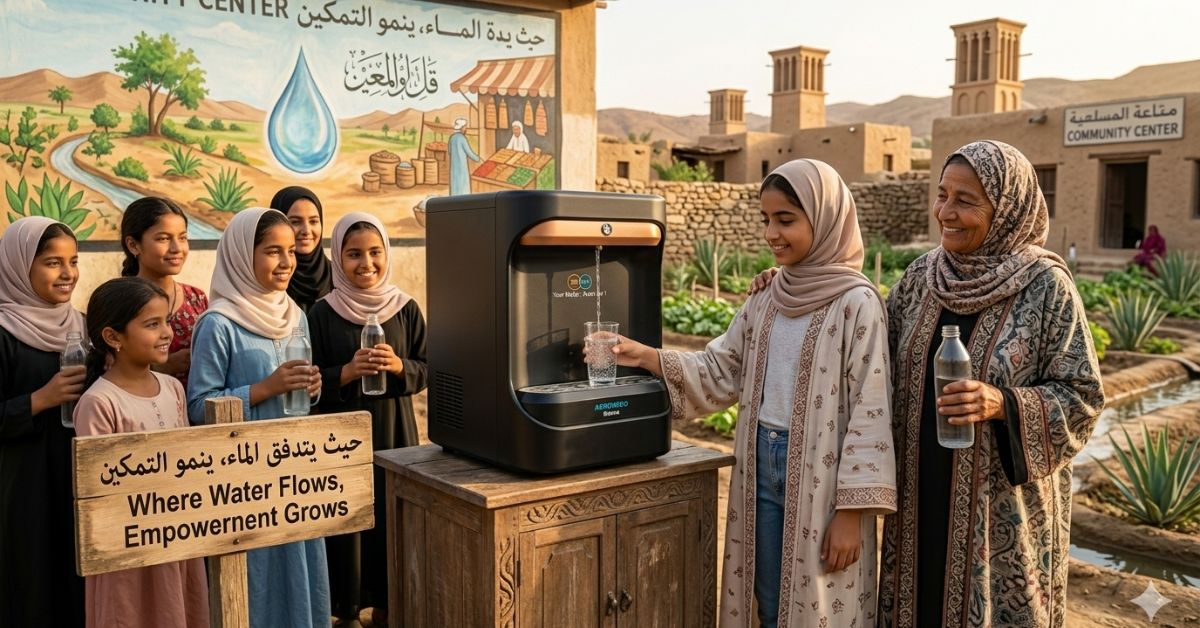
The theme for World Water Day 2026, “Where Water Flows, Equality Grows,” highlights the strong connection between water access and gender equality.
It reinforces that:
· Water solutions must be inclusive
· Women must be part of decision-making processes
· Innovation should serve communities, not just systems
This is not just a vision—it is a call to action for governments, organizations, and individuals alike.
The Path Forward: Collaboration and Commitment
Creating a future where everyone has access to clean water requires collective effort.
Key Steps Forward
· Investing in innovative water technologies
· Promoting women’s participation in water leadership
· Expanding access to decentralized solutions
· Educating communities on sustainable practices
When these elements come together, the impact is transformative.
Conclusion: Empowerment Through Water
Water has always been essential to life—but today, it is also a symbol of empowerment.
By combining innovation with inclusion, we can build a world where:
· Communities are self-reliant
· Women lead change
· Opportunities are accessible to all
The future of water is not just about supply—it is about unlocking human potential.
When water flows freely and equitably, equality grows with it.
Final Thought
Empowering communities through water is not just a goal—it is a responsibility.
Every drop of water carries the potential to transform lives.
And every empowered individual has the power to transform the world.